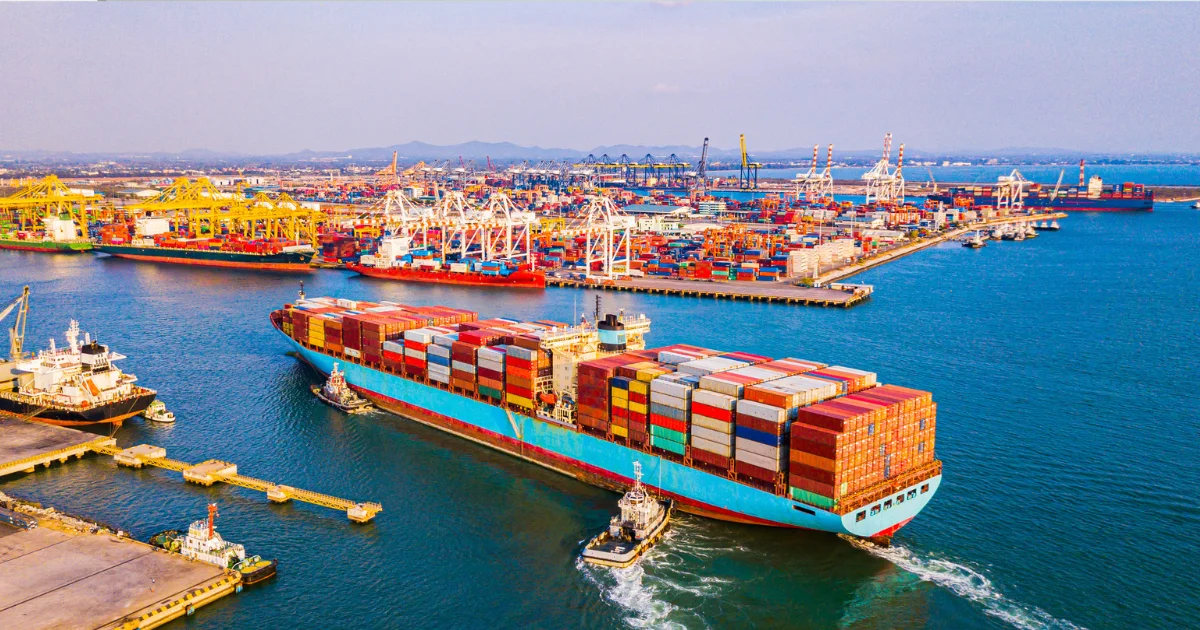
Introduction: "Can we export this product as it is?"
If your work involves sending products abroad, questions like these come up often.
- "A customer asked us for a classification statement."
- "We don't know if our parts are covered by export controls."
- "We heard a licence may be needed depending on the destination country or company."
- "The control lists are written in the country's own language and are hard to read."
Export control is a set of rules that keeps weapons, and dual-use items that could also be used for weapons, out of the wrong hands. Many countries control this through their own laws, based on international agreements.

What is export control classification?
Export control classification means checking whether a product or technology you plan to export is listed or not listed on an export control list. If it is listed, you need a government licence before you export it.
1. List-based controls
The products and technologies that are controlled are set out in a control list, by performance and specification. Two products of the same type can be treated differently, depending on their performance figures.
2. Catch-all controls
Even if a product is not on the list, a licence may be needed depending on the receiving company or the end use. You also check that your business partner is not on any country's list of parties of concern.
3. Rules differ by country
Export control is set by the laws of the country you ship from. And if your product includes products or technology from another country, that country's rules may also apply.
Other points worth checking in export control include sharing technology (handing over designs or software), sanctioned countries, people and companies, and keeping export records.
The basic steps of export control classification
- Gather the product specifications — have the figures you need on hand, such as performance, materials and functions
- Compare with your country's control list — check the latest official list for any matching entry
- Check the recipient and the end use — make sure the partner is not a party of concern and there is no risk of military use
- Keep a record of the result — save it with the evidence, for example as a classification statement
- Get a licence if the item is listed — check how to apply to the competent authority
The hard part: finding and reading "that country's official information"
- The language barrier — control lists and laws are written in the country's own language
- The search effort — controls, licence procedures and lists of parties of concern are spread across different authorities
- Keeping up to date — lists change often, and it is hard to tell which rules apply today
Check official information in your native language with Factdock's Trade & Compliance
Factdock's Trade & Compliance is a tool where you just choose a product, the country you ship from and the destination country. It searches only official sources such as customs, regulators and governments in that country's own language, and shows the results in your native language.
This tool helps you find official information. It does not classify your product, and it is not legal advice. For classification and export decisions, always check the official control lists and the original documents, and consult the competent authority or experts.
1. Choose the product, the country you ship from and the destination
Enter the product name or HS code, then choose the country you ship from and the destination country.
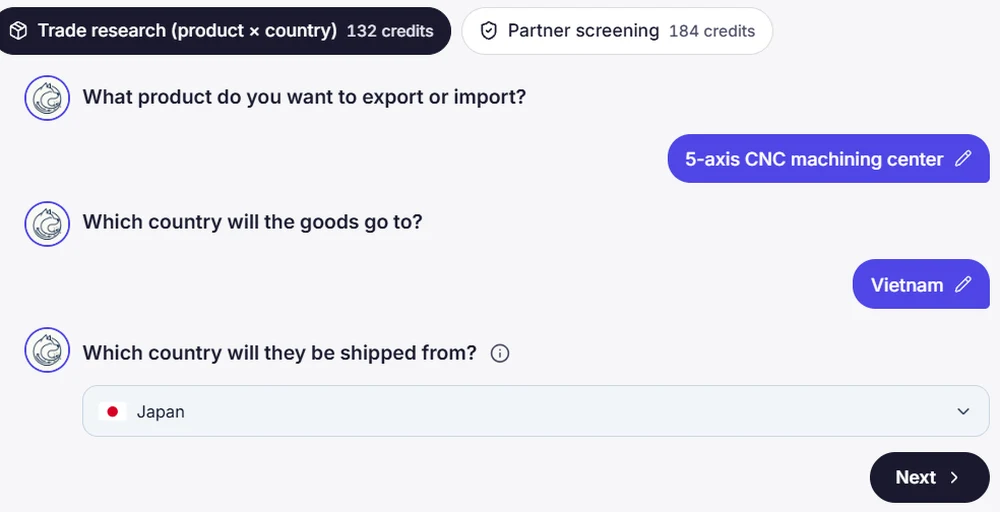
2. Search the export rules of the shipping country, in that country's language
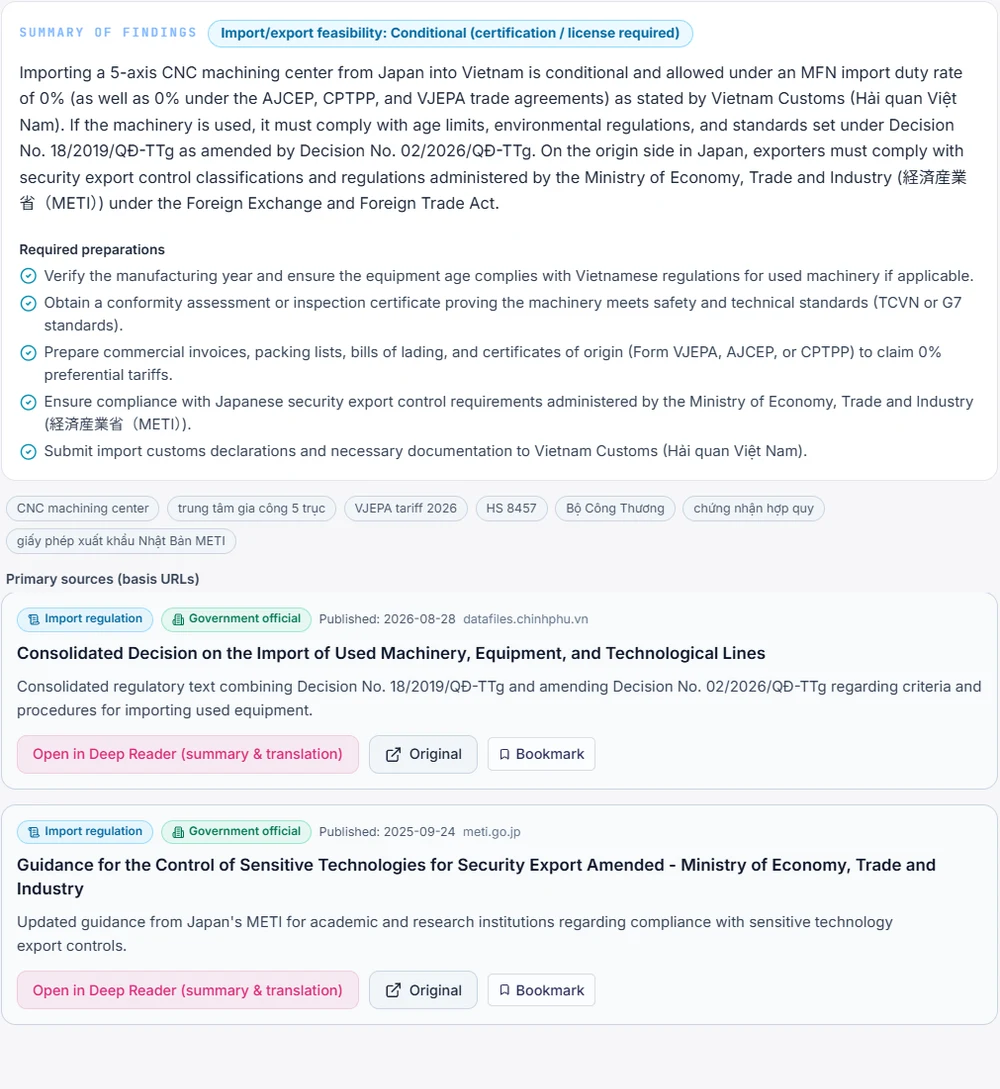
Besides the import rules of the destination country, it also searches official information on export control, export licences and export procedures in the country you ship from, using that country's official terms.
3. Results with sources, in your native language
The documents found are listed with titles and summaries in your native language, and each one has a link to the original document. Documents that mention points to watch, such as a licence requirement, are marked.
For trade rules as a whole, including sanctions and tariffs, see our article on trade compliance basics. To check your business partners, see how to check an overseas company.
Who it is for
- Export staff — for groundwork when a customer asks for a classification statement
- Makers of parts, machines, chemicals and more — when you want to check the rules of the shipping country before sending to overseas customers
- Trading and logistics companies — when you want to check export and import rules for several countries at once
- Anyone who wants to research in their own language — input and results in your native language
Pricing
Available from $3. Feel free to give it a try. You can find full pricing on our pricing page.
In closing
With export control, "we didn't know" is not an excuse. That is why it matters to check the official, up-to-date information of the country you ship from.
When you wonder, "Can we export this product as it is?", start by checking the official information in your native language.
* The content shown is reference information gathered and organized from official sources. It is not a classification of your product or legal advice. Before exporting, always check the official control lists and the original documents, and consult the competent authority or experts.
What it is
Trade & Compliance
Name a product or HS code and the destination country, and it searches tariffs, import regulations and required documents from customs and regulator sources in one pass. Sanctions screening is included, so you can judge whether a shipment is viable at speed.
Corporate Intelligence
Identifies the company from its name and country, then investigates registration, litigation and sanctions data in both the local language and English. Risk is organised into three grades and shown with sources, so pre-deal verification and due diligence finish in a fraction of the time.
Factdock in 2 minutes 30 seconds
The video is in English. You can choose subtitles in your language from the player settings.
Frequently asked questions
Can Factdock do export control classification for me?
No. Factdock only searches official information, such as export control rules and control lists, and shows it with its sources. The exporter must decide whether an item is listed by checking the official control lists, and consult the competent authority or experts when needed.
What sources does it use?
Only official sources such as customs, regulators, governments and international organizations. It does not use information from aggregator sites or blogs.
Can it also search the rules of the country I ship from?
Yes. When you choose the country you ship from, it also searches that country's official information on export control, export licences and export procedures, in that country's language.
Can I use it in English?
Yes. Both input and results are shown in English. You can also use it the same way in 109 languages, including your native language.
How much does it cost?
It is available from $3. For full pricing, please see our pricing page.
Our own patent-pending search engine
Export rules, from official sources. In your own language.
Just choose a product and countries. Check the rules of the shipping and destination countries from official sources, with citations, in your native language.