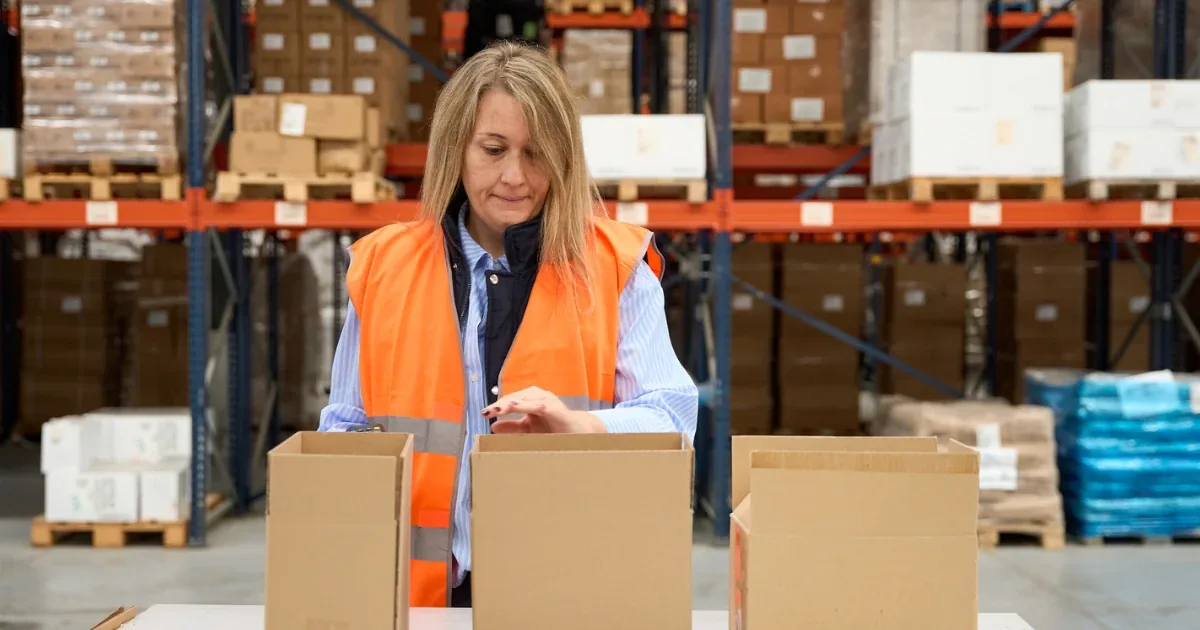
First: what is “trade compliance”?
In one sentence: it means checking that you follow the rules for importing and exporting.
Selling across borders is different from selling at home. Many sets of rules apply: the rules of the country you ship from, the rules of the country you ship to, and international agreements. If you miss even one, things like this can happen.
- “My package got stuck at customs and never arrived.”
- “The tariff was higher than I expected, so I made no profit.”
- “I didn't have the right certificate, so the goods were sent back.”
- “My business partner turned out to be under sanctions.”
Trade compliance is how you prevent these problems before you ship. It matters not only for big companies, but also when your online shop sells a single item abroad.

5 basics to know first
1. Tariffs and HS codes
A tariff (customs duty) is the tax you pay when goods are imported. The rate depends on the product's HS code, a number from a worldwide product classification. The same product can have a different rate depending on the importing country and where it was made (its country of origin).
2. Import regulations
Some countries ban certain products, or require a permit or set quantity limits. Food, cosmetics, medicines, chemicals and electrical products are areas that especially need checking.
3. Documents and certifications
Besides the invoice and a certificate of origin, the other country may require safety certifications or proof that you meet its standards. Some take several weeks to get, so it helps to know early.
4. Export controls
Technology and parts that could be used for military purposes may need a permit under the rules of the exporting country. A point many people miss: “Even if the buyer's country has no problem with it, you may still need a permit from your own country.”
5. Checking sanctions lists
Governments and international organizations publish lists of people and companies you may not trade with, or may trade with only under limits (sanctions lists). Checking that your business partner is not on these lists is called counterparty screening.
For all of these, the final word is the official information published by each country's customs and authorities. But much of it is written in that country's language, and it takes real effort to find and read.
The hard part: getting to the official information
When you actually start looking, you run into walls like these.
- The language barrier — customs notices and regulations are often written only in the local language
- Too many places to look — tariffs are at customs, regulations at ministries, certifications at other agencies, and each country has its own sanctions lists
- Online guides may be out of date — summary articles and agents' explanations don't always keep up with the latest changes
“So which one is right?” Even experienced traders ask themselves this.
Check it in your own language with Factdock's Trade & Compliance
Factdock's Trade & Compliance is a search tool that helps you do these checks in a few minutes before you ship.
* The screenshots in this post are shown in Chinese (Traditional), Spanish and German. Product and company names are fictional examples. The tool works the same way in every language.
1. Just enter the product and countries in your own language
Simply describe the product in everyday words. If you know the HS code, you can add it, but you can start without it. Then choose the exporting country and the importing country. Factdock works in 109 languages.
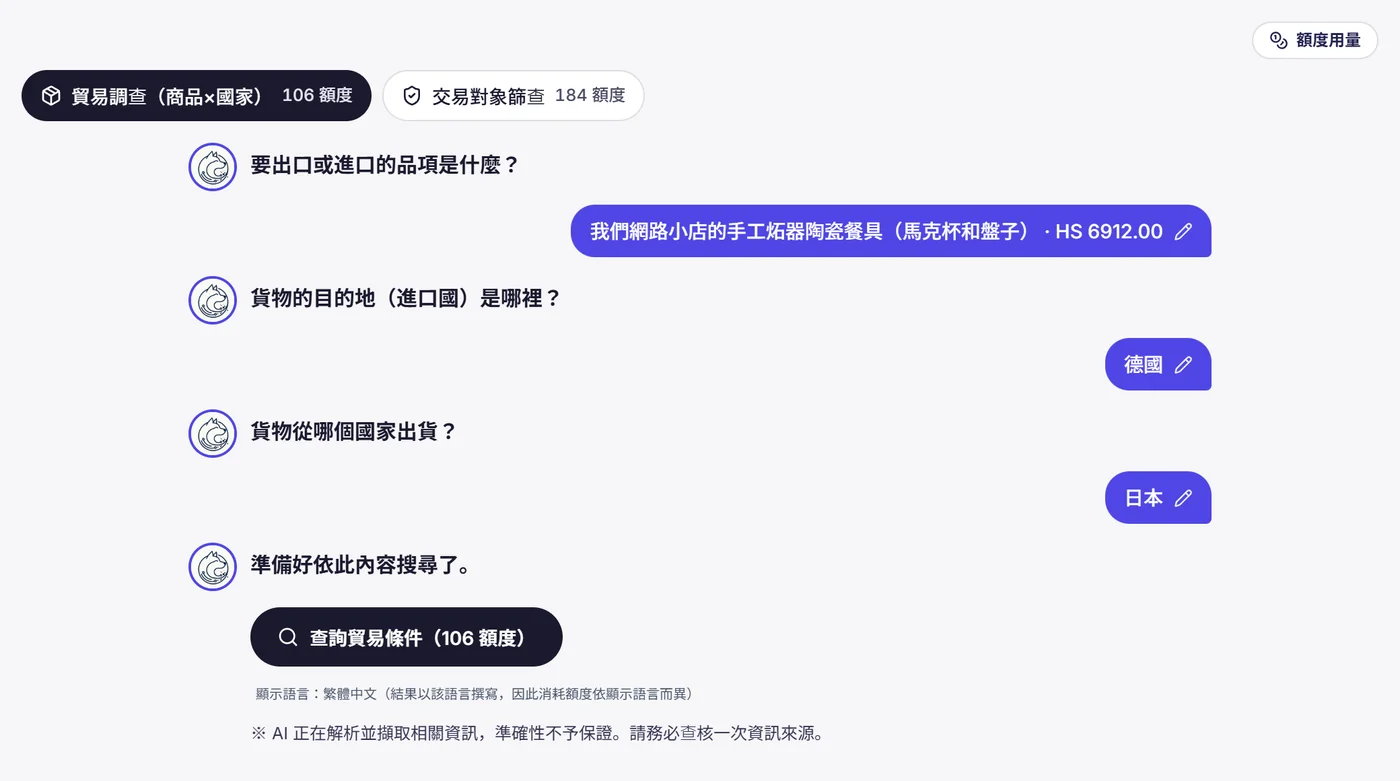
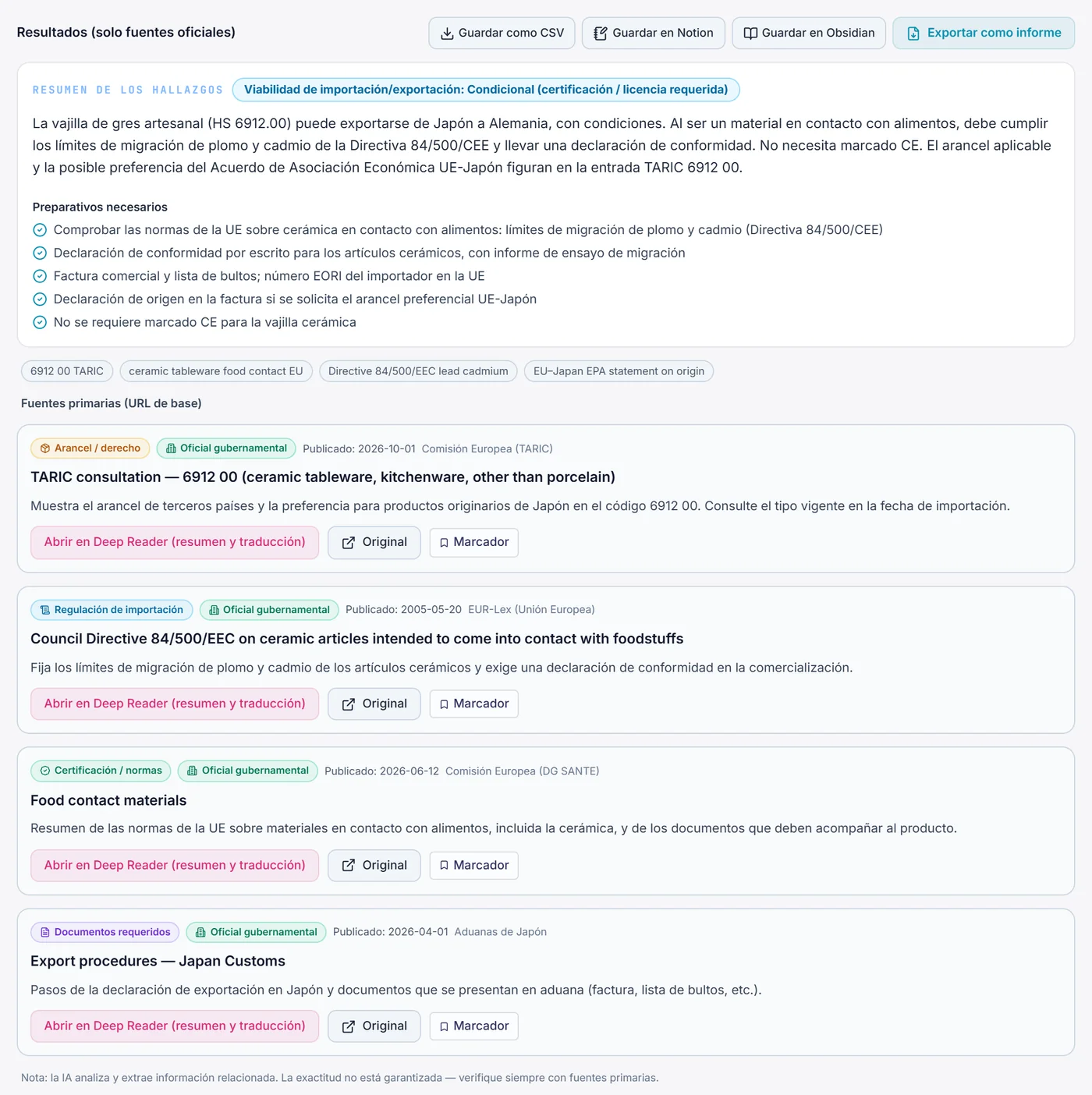
2. We search official customs and authority information and organize it clearly
We focus our search on official information published by customs offices, trade authorities, certification bodies and others, and show it in groups: tariffs and rates / import regulations / required documents / certifications and standards / sanctions and export controls.
Then we give a guide on whether the goods can be imported, in 5 levels: “Import allowed,” “Allowed with conditions,” “Restricted,” “Import prohibited” and “Needs checking.” A list of what to prepare next is also shown in your language. Every item comes with the source URL of the original document.
3. Check sanctions lists by your partner's name
Enter your business partner's company name, and we check it against sanctions lists published by the US, the UN, the EU and the UK, the End User List of Japan's Ministry of Economy, Trade and Industry (METI), and more. Companies with the same name but a clearly different country or industry are shown separately.
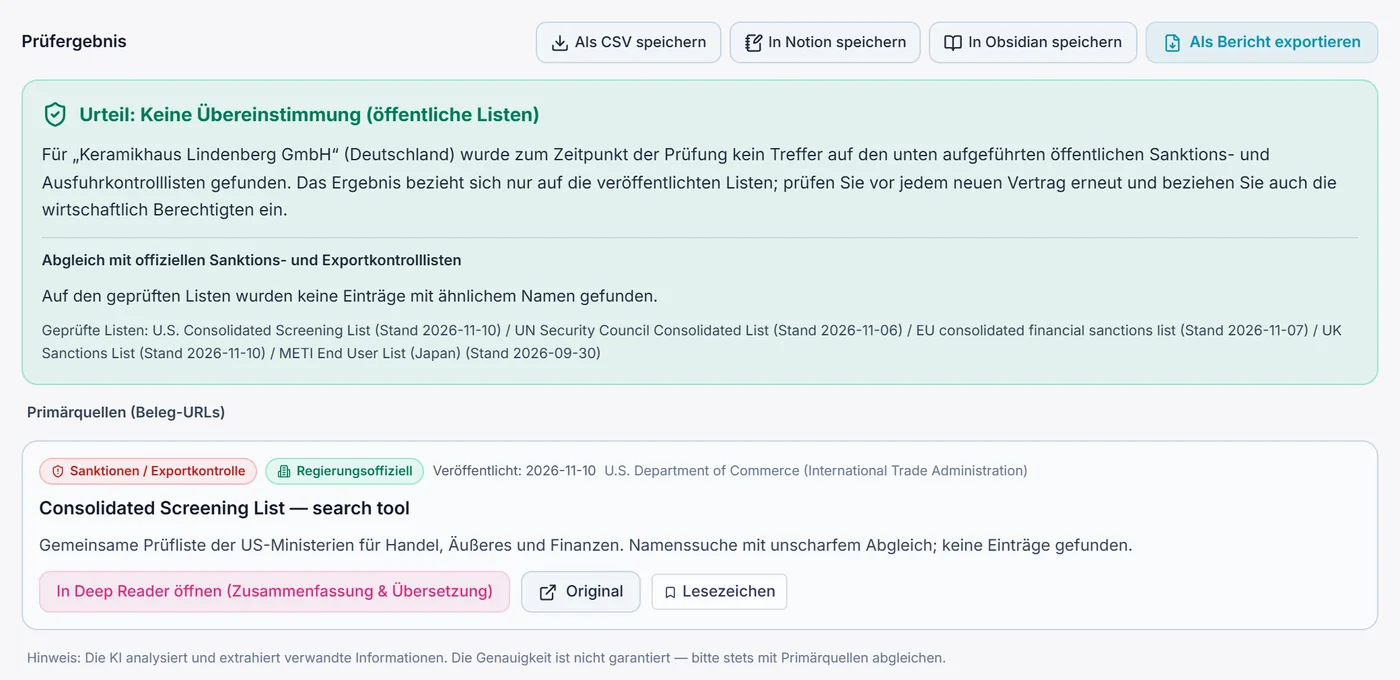
Please use the results as material to help you decide. Not being found on a list does not mean “safe.” If you see a similar name or are unsure, please check the official list of each authority or ask an expert.
Who we made this for
- People who are about to start trading — when you want to understand what to check for your first import or export
- Online shops selling abroad — when you want to check regulations and required documents before shipping to a new country
- Trade staff at trading companies and manufacturers — when you want to back up an agent's explanation with official customs documents
- Anyone about to sign with a new business partner — when you want to check the company's name against sanctions lists first
- People who want to research in a language other than English — input and results, all in your own language
Pricing
Plans start from $9 a month. Feel free to give it a try. You can find full details on our pricing page.
In closing
Trade rules differ from country to country, and they change often. That's why checking official information before you ship is the best shortcut.
If you're wondering, “Can I send this product to that country?”, start by looking it up in your own language.
* Tariffs and regulations change at any time. The information shown is for reference, based on public information found by search, and is not legal or customs advice. Before making a final decision, please check with each country's authorities or an expert.
Factdock in 2 minutes 30 seconds
The video is in English. You can choose subtitles in your language from the player settings.
Frequently asked questions
What is trade compliance?
It means checking that you follow the rules for importing and exporting. It includes tariffs, import regulations, required documents and certifications, export controls and sanctions list checks. Checking before you ship helps you avoid problems such as goods being stopped at customs.
Can I use it if I don't know the HS code?
Yes. Just enter the product name in everyday words and search. If you know the HS code, you can enter it too.
Which sanctions lists do you check against?
We check against sanctions lists published by the US, the UN, the EU and the UK, the End User List of Japan's Ministry of Economy, Trade and Industry (METI), and more. If a matching or similar name appears, please confirm it on the official list of each authority.
Can I use it in my own language?
Yes. Input and results are shown in your language. Besides English, you can use it the same way in 109 languages, including your own native language.
How much does it cost?
Plans start from $9 a month, so it's easy to get started. For full details, please see our pricing page.
Our own patent-pending search engine
Before you ship it, check it in your own language.
Just enter the product and the countries. Check official customs and authority information, with sources, in your own words.