
First: do you only hear about overseas public projects after the deadline has passed?
Most public infrastructure suppliers are chosen by governments and local authorities through a public tender (open call). For companies that want to work on projects abroad, this is a big opportunity. But we often hear things like this.
- “By the time it was in the English-language news, the deadline had already passed.”
- “I don't know which ministry's website to look at.”
- “It's written in the local language, so I can't read it.”
- “If I had known at the planning stage, I could have prepared.”
The information on overseas public projects does exist. In most cases, it is published in that country's language, on that country's government websites.

4 basics to know about public projects
1. What is a public tender (public procurement)?
When a government or local authority buys construction work, goods or services, it publishes its conditions, invites companies to apply, and chooses one. To keep the choice fair, many countries require a tender notice to be published.
2. Projects move through “phases”
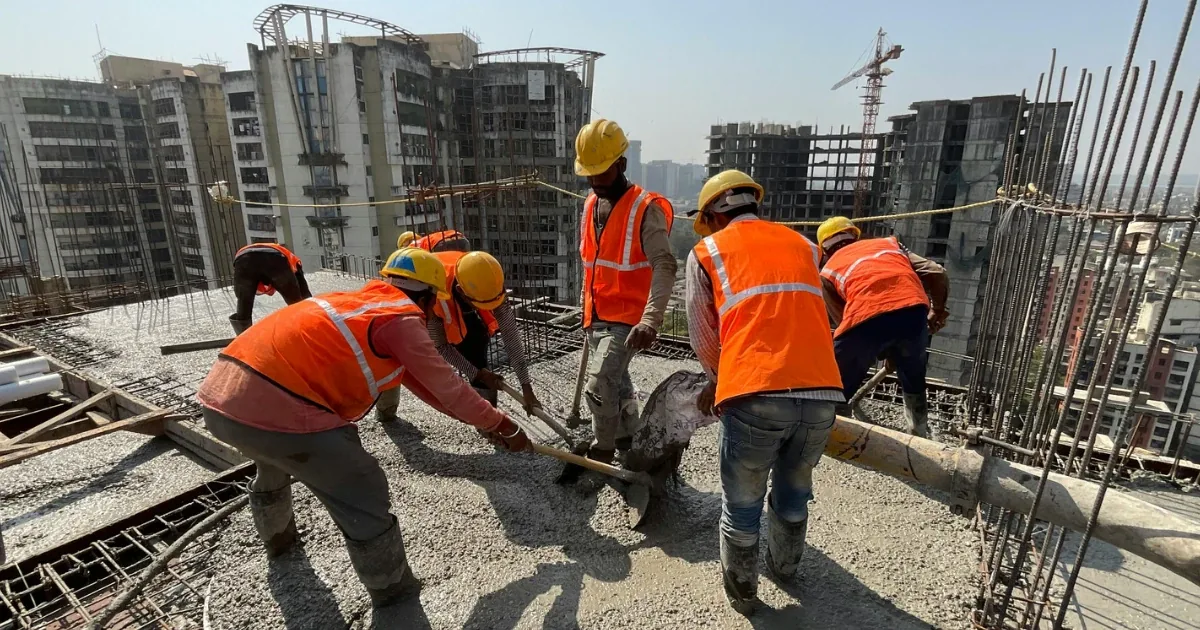
A public project moves from planning → tender and procurement → construction → completion and operation. If you learn about it at the planning stage, you have time to find partners and prepare.
3. Where is the information published?
It appears in official government places: national and local procurement websites, ministry websites, official gazettes and so on. Each region or country has its own place for notices, such as TED in the EU, which gathers notices from member states, or SAM.gov in the US.
4. Projects of international development organizations
Projects funded by organizations such as the World Bank or the Asian Development Bank (ADB) publish their procurement information under each organization's rules. Some of these projects are open to companies from other countries.
In every case, the first thing to rely on is official documents published by governments and public bodies. But most of them are written in the local language, using local administrative terms.
The hard part: searching with “local administrative terms”
For example, for a road plan in Thailand, you need words like “ถนน” and “ทางหลวง”. Unless you search with the words the ministries actually use, it is hard to reach the official documents.
- The language barrier — plans and notices are often written in that country's language
- Many places to look — each country, ministry and international organization has its own site
- Information changes quickly — deadlines and project phases are updated all the time
Even experienced staff have to start their search from scratch every time the country changes.
Search in your own language with Factdock's Government & Infrastructure
Factdock's Government & Infrastructure is a search tool: just choose a country and a sector, and we search official documents from governments and international development organizations in that country's language, then show them as a list in your own language.
* The screenshots in this post are shown in French and Chinese (Simplified). Project names are sample examples. The tool works the same way in every language.
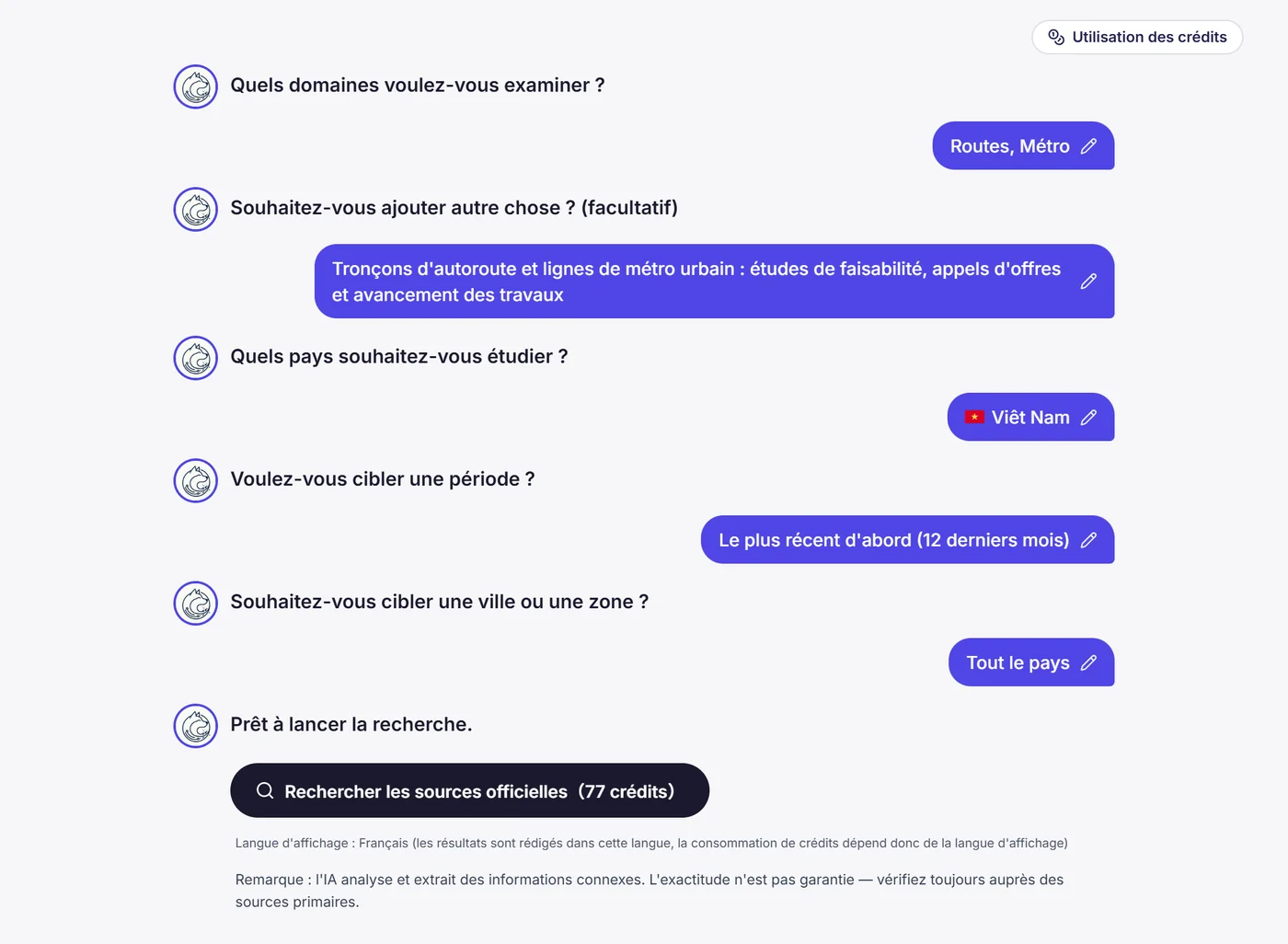
1. Just choose a country and a sector
You can choose from 7 sectors and about 60 items, such as transport and logistics, urban development, energy, digital, social and public services, and disaster prevention. You can also narrow it down by city or region. Input and results are in your own language, and Factdock works in 109 languages.
2. We search in the local language and keep the official documents
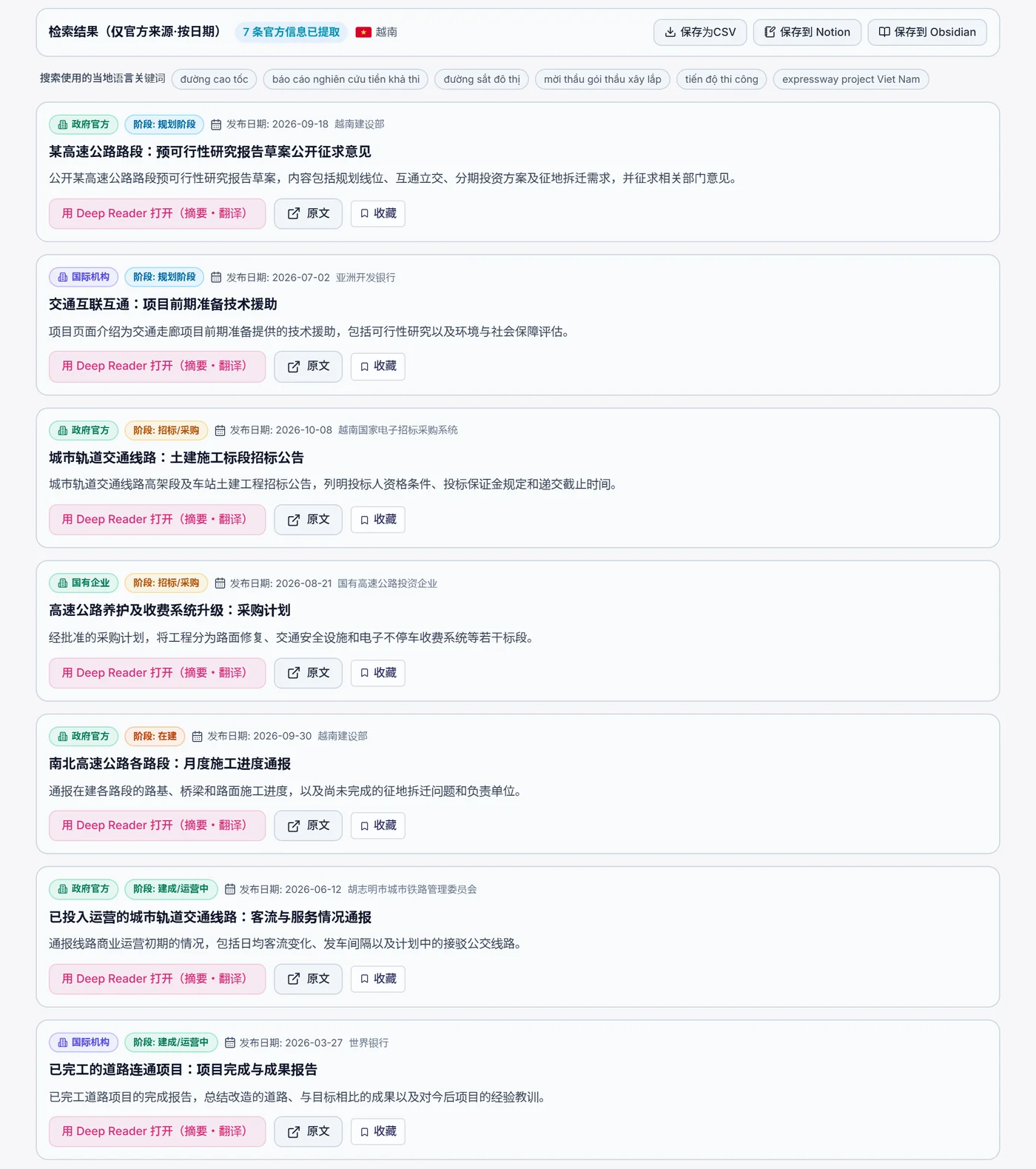
We search with the country's official language and administrative terms, and keep mainly official government websites and information from international development organizations. We also search the official procurement notices published by countries and organizations, such as TED in the EU, SAM.gov in the US, the UK procurement site and the World Bank.
3. Sorted by phase and date, to read in your own language
The documents we find are grouped into “Planning”, “Tender & procurement”, “Under construction” and “Completed & in operation”, and listed by publication date. Summaries are shown in your own language, always together with the link to the official original and the organization that published it.
Deadlines and conditions for taking part can change. Before you decide to take part, please always check the original tender notice and the guidance from the organization running it.
Who we made this for
- People who want to try bidding on overseas tenders — when you first want to get an overall picture of what projects are out there
- Overseas sales staff in construction, equipment, IT and more — when you want to learn early about plans in the countries you want to enter
- Trading companies and consultants — when you want to follow projects of international development organizations in one place
- Research and investment staff — when you want to attach the government's original documents to your reports as sources
- People who want to research in a language other than English — input and results, all in your own language
Pricing
Plans start from $9 a month. Feel free to give it a try. You can find full details on our pricing page.
In closing
Information on overseas public projects is published around the world almost every day. Whether you notice it or not depends on one thing: “Can you search in that country's language?”
If you're wondering, “What infrastructure plans are moving forward in that country?”, start by searching in your own language.
* The information shown is for reference, based on public information found by search. Before deciding to take part in a tender or sign a contract, please check the official guidance of the organization running it, or ask an expert.
Factdock in 2 minutes 30 seconds
The video is in English. You can choose subtitles in your language from the player settings.
Frequently asked questions
What is a public tender (public procurement)?
When a government or local authority buys construction work, goods or services, it publishes its conditions, invites companies to apply, and chooses one. Many countries require tender notices to be published.
Can I use it if I don't understand the local language?
Yes. When you choose a country and a sector, we search with that country's official language and administrative terms, and show summaries of the documents we find in your own language. Links to the originals are shown too.
Which sources do you search?
We mainly search official government and ministry websites in each country, international development organizations such as the World Bank, and official procurement notices such as TED in the EU, SAM.gov in the US and the UK procurement site.
Can I use it in my own language?
Yes. Input and results are shown in your language. Besides English, you can use it the same way in 109 languages, including your own native language.
How much does it cost?
Plans start from $9 a month, so it's easy to get started. For full details, please see our pricing page.
Our own patent-pending search engine
That country's tenders and infrastructure plans, in your own words.
Just choose a country and a sector. We list official documents from governments and international development organizations, with sources.